Delta
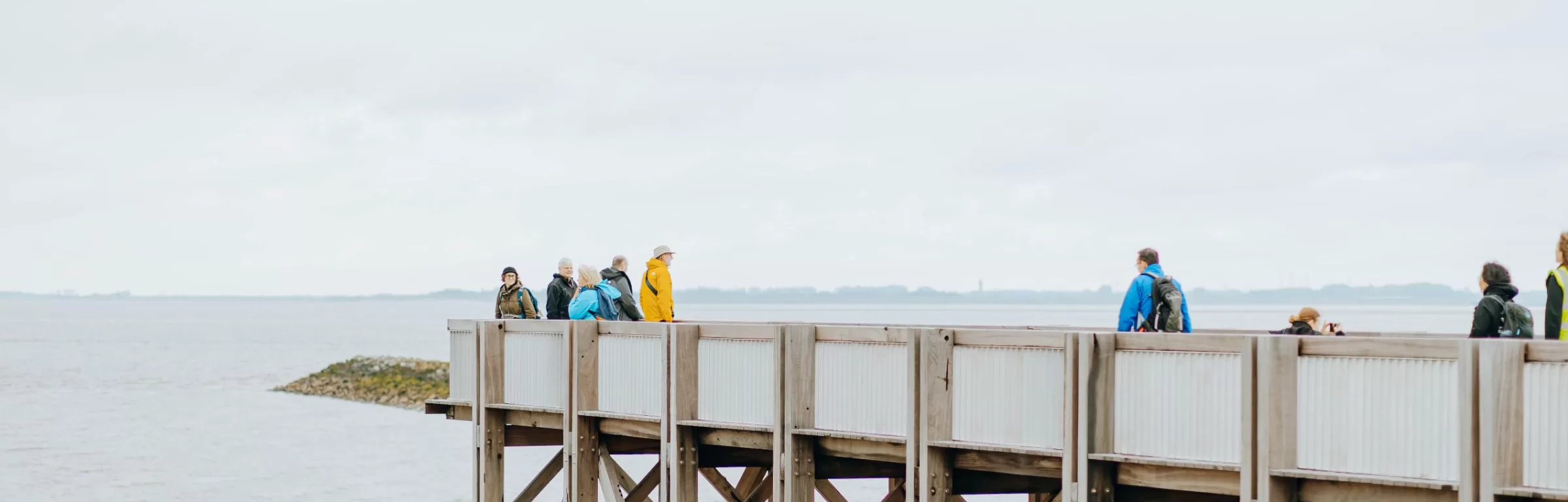
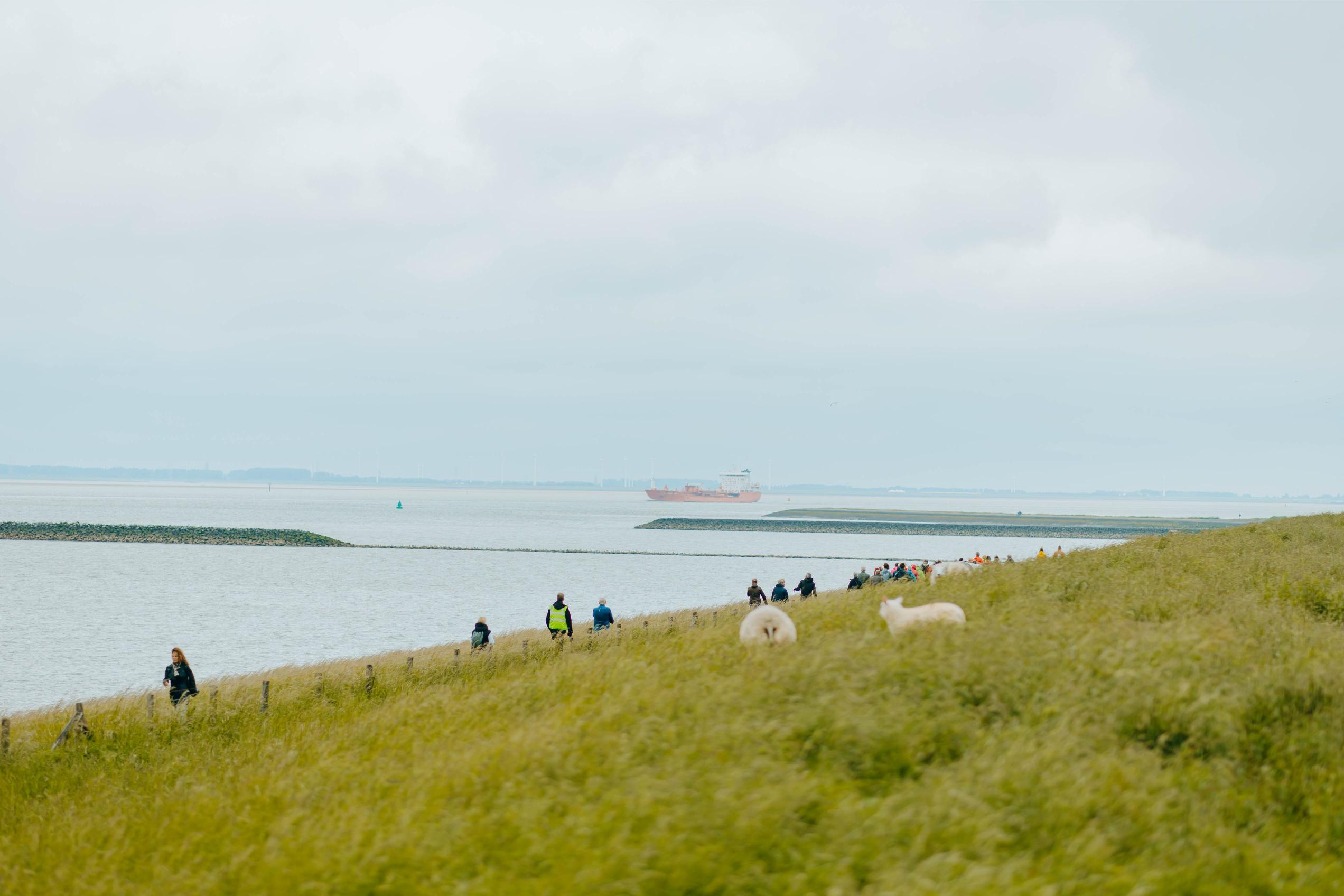
The Delta region is one of the most remarkable landscapes in Europe – and one of the most precarious. The Netherlands and Belgium have spent centuries reclaiming land from the sea, building an elaborate system of dikes, polders and water management infrastructure that has made habitation possible in a place that would otherwise be underwater. Hidden in the triangle between the River Scheldt, the port of Antwerp, and a motorway, the landscape of Grenspark Groot Saeftinghe is one of Europe's most extraordinary and least-known territories.
The future of this transnational, liquid territory is being shaped by pressures from port logistics, industrial agriculture, and climate-driven sea-level rise. Sea levels are rising. Extreme weather events are becoming more frequent. The question of how to live with water – rather than simply against it – has become urgent in a way it has not been for generations.
The BoS pilot in the Delta brought designers, researchers, spatial planners, local communities, and students into dialogue with this landscape, deploying Future Tidal Architectures and Living with Water drops to explore what it means — and what it could mean — to live alongside tidal nature.
The Delta pilot was led by the EGTS Grenspark Groot Saeftinghe, in partnership with the Nieuwe Instituut and worked in and around the Grenspark – a transboundary nature reserve straddling the Dutch-Belgian border, where the process of de-poldering is already underway: land reclaimed from the sea being returned to it, deliberately, as a form of ecological restoration.
Future Tidal Architectures — Designing at the Edge
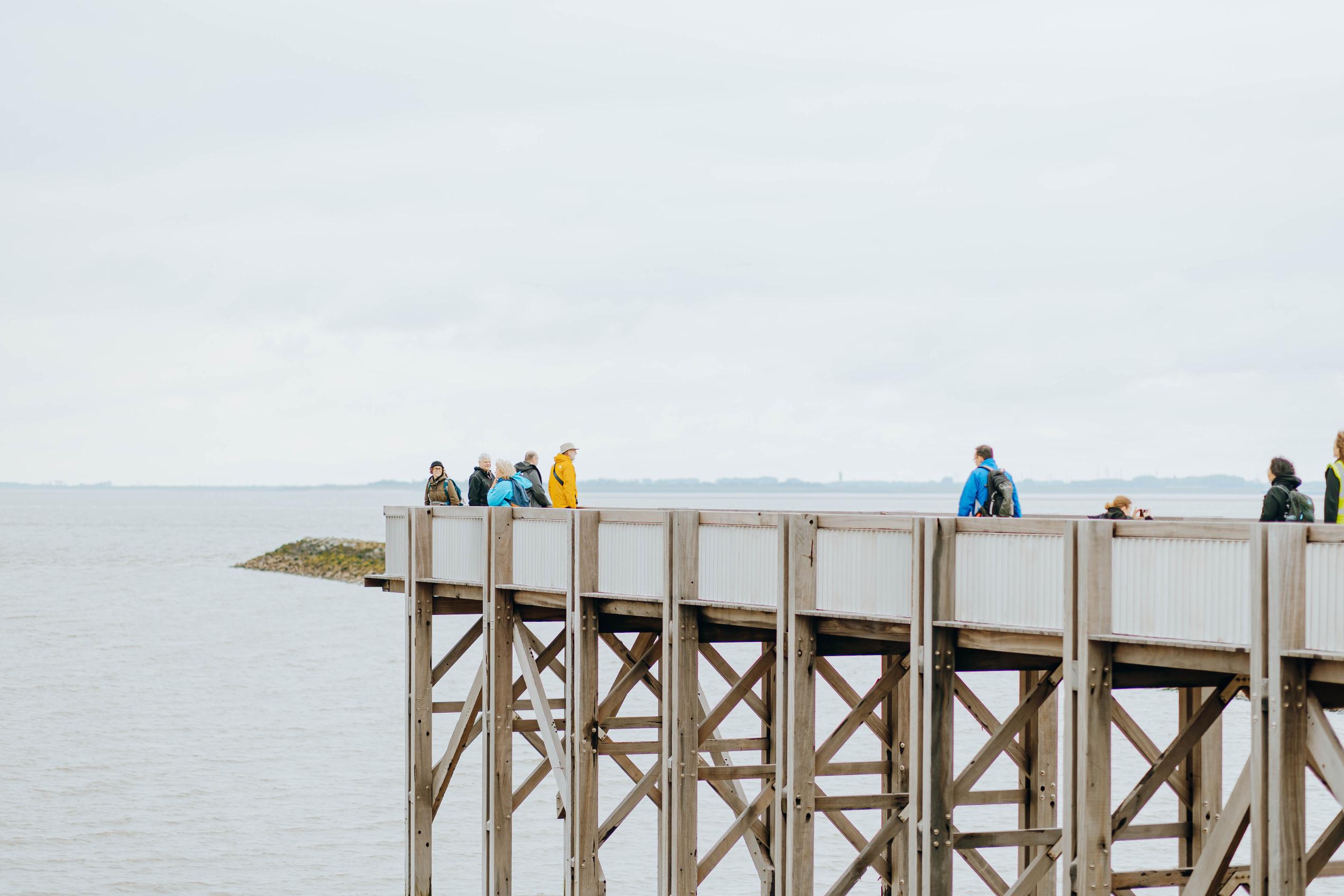
A series of expert-supported workshops brought together designers, researchers, spatial planners, and local stakeholders to develop alternative futures for the Delta's de-poldered areas, ports, and adjacent agricultural landscapes. Site-based explorations and mapping activities in and around Grenspark Groot Saeftinghe gave these conversations a grounded, territorial character: participants walked the landscape, traced the movement of tides, and confronted the concrete conditions of rewilding and climate adaptation in a place that has been shaped and reshaped by human intervention for centuries.
Public-facing sessions hosted with Nieuwe Instituut and regional partners framed the Delta as an urban-rural region with shared water challenges. Student visits to Grenspark Groot Saeftinghe (including a group from Doel, Belgium in March 2025 and a Youth Network visit in July 2025) translated this expert work into formats accessible to younger generations with a personal stake in the territory's future.
The Next Generation Podium engaged students from over 20 universities in scenario-building for the area, yielding proposals for salt-resistant crops, climate-resilient architecture, and hybrid land-use models that combine ecological, agricultural, and economic values. These scenarios are actively being discussed by the Grenspark Groot Saeftinghe partnership and decision-makers in the region as inputs for planning beyond the project.
Living with Water — Experiential Learning in Rotterdam
A complementary drop, added to the pilot to address urban water-identity challenges not fully captured in the initial rural focus, brought the Delta's water themes into the city of Rotterdam through a series of participatory and experiential formats.
The After Summer School programme (Rotterdam, 30 September–4 October 2024) brought together students and practitioners for an extended period of exchange around the themes of water futures and regenerative design. The programme included the Water School — an educational framework using hands-on exercises and discussion to engage participants with everyday water relations, flooding, safety, and climate adaptation — and BoS-Zoöp workshops, which have since been integrated into the After Summer School's regular curriculum.
LARP-inspired role-play and scenario-based exercises allowed participants to simulate water governance dilemmas and climate adaptation choices, enabling embodied engagement with complex issues that can otherwise remain abstract. These facilitation scripts and experiential methods are fully documented and available for reuse by local partners and other regions.
A subsequent After Summer School in 2025 continued this approach, and WP5 participated in both editions, embedding impact assessment and reflection into the learning process itself.
Zoöp Integration — Nieuwe Instituut
The Nieuwe Instituut in Rotterdam is home to the fully certified Zoöp Nieuwe Instituut — the first fully operational Zoöp in the BoS network. The Delta pilot's BoS-Zoöp activities were integrated into this existing structure, bringing the project into dialogue with one of Europe's most developed experiments in organisational ecology. The Zoöp's Speaker for the Living has been a driving force for integrating regenerative perspectives across all pilot activities in the Delta, and the methodology developed here has informed Zoöp practice across all seven BoS pilots.
The Drops
The Future Tidal Architectures drop brought designers, researchers, spatial planners and local stakeholders together to imagine alternative futures for the de-poldered landscapes of the Delta. Working through scenario-building workshops, site-based explorations and public sessions, participants developed spatial narratives and design propositions for landscapes that are already changing – and will change further. The workshops drew on the specific territorial conditions of Grenspark Groot Saeftinghe as a laboratory for thinking about tidal dynamics, rewilding and the futures of port, nature and agricultural land in a climate-changed region.
The Living with Water drop – added to the Delta pilot in response to the specific needs of the Rotterdam context – explored the everyday experience of living in a water-managed landscape through participatory and experiential methods. The Water School, the After Summer School programme and a series of LARP-inspired role-play sessions invited participants to engage with water governance dilemmas and climate adaptation choices through embodied experience rather than abstract debate – making complex issues tangible and personal.
The Ripples
The After Summer School public programme at Het Nieuwe Instituut attracted more than 400 participants and engaged students from over 20 universities through the Next Generation Podium. The Water School and Zoöp workshops have been integrated into the Nieuwe Instituut’s ongoing educational programming, ensuring that the methods developed during Bauhaus of the Seas Sails continue to reach new audiences.
Student scenarios developed through the Future Tidal Architectures workshops – proposing salt-resistant crops, climate-resilient architecture and hybrid land-use models for the Saeftinghe area – are being discussed by regional decision-makers as inputs to long-term territorial planning. The Grenspark Groot Saeftinghe partnership has expressed a clear desire to integrate storytelling and scenario-making into their post-2026 programme.
What it Leaves Behind
The Delta pilot leaves behind a set of documented educational formats, facilitation scripts and spatial scenarios that are available for reuse and adaptation. The scenario-building methodology is directly relevant to any coastal or riverine territory grappling with climate adaptation and land-use change. The Living with Water formats are designed to be portable – applicable in any community that needs new ways of engaging with the water challenges it faces.