Venice
LAGOON ECOSYSTEM
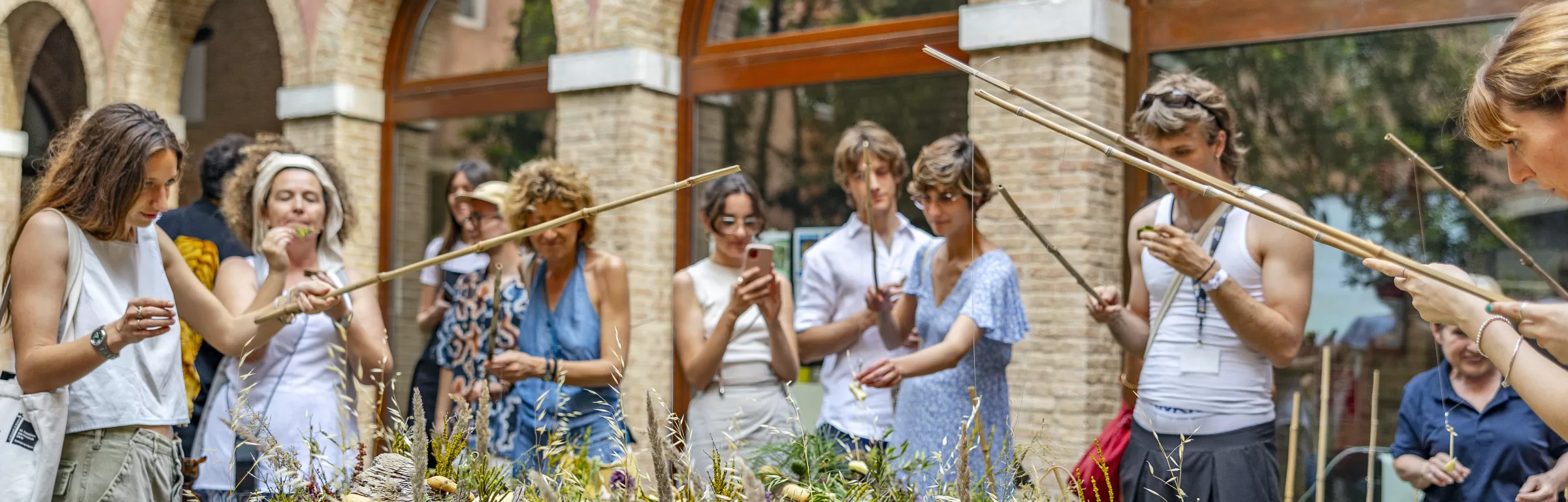
Venice is a city that lives in constant negotiation with water. Rising tides, sinking foundations and the paradox of mass tourism are threatening the very heritage its visitors come to witness. Yet the Venice that Bauhaus of the Seas Sails worked with is not the one most visitors see. It is the Venice of residents: people navigating an increasingly difficult relationship between the beauty of the place they live in and the pressures that threaten to make it unliveable; a lagoon ecology under strain from flooding, pollution and overdevelopment; a population ageing and shrinking as housing costs rise and services disappear; a waterfront whose future is being decided in planning offices and port authority meetings that most citizens have no way to enter.
The San Basilio and Santa Marta waterfront area of the Dorsoduro sestiere — a stretch where ancient settlement, 19th-century industry, and the contemporary port still stand in uneasy proximity — was chosen as the site for a demonstrator pilot that would address distinct but interrelated challenges of its citizens.
The Venice pilot was led by Ca’ Foscari University of Venice in partnership with IUAV University and worked across three distinct drops – Blue Seniors, Regenerative Menu and Future Tidal Architectures drops – each addressing a different dimension of the city’s relationship with its lagoon.
Blue Seniors — Co-Design Across Generations
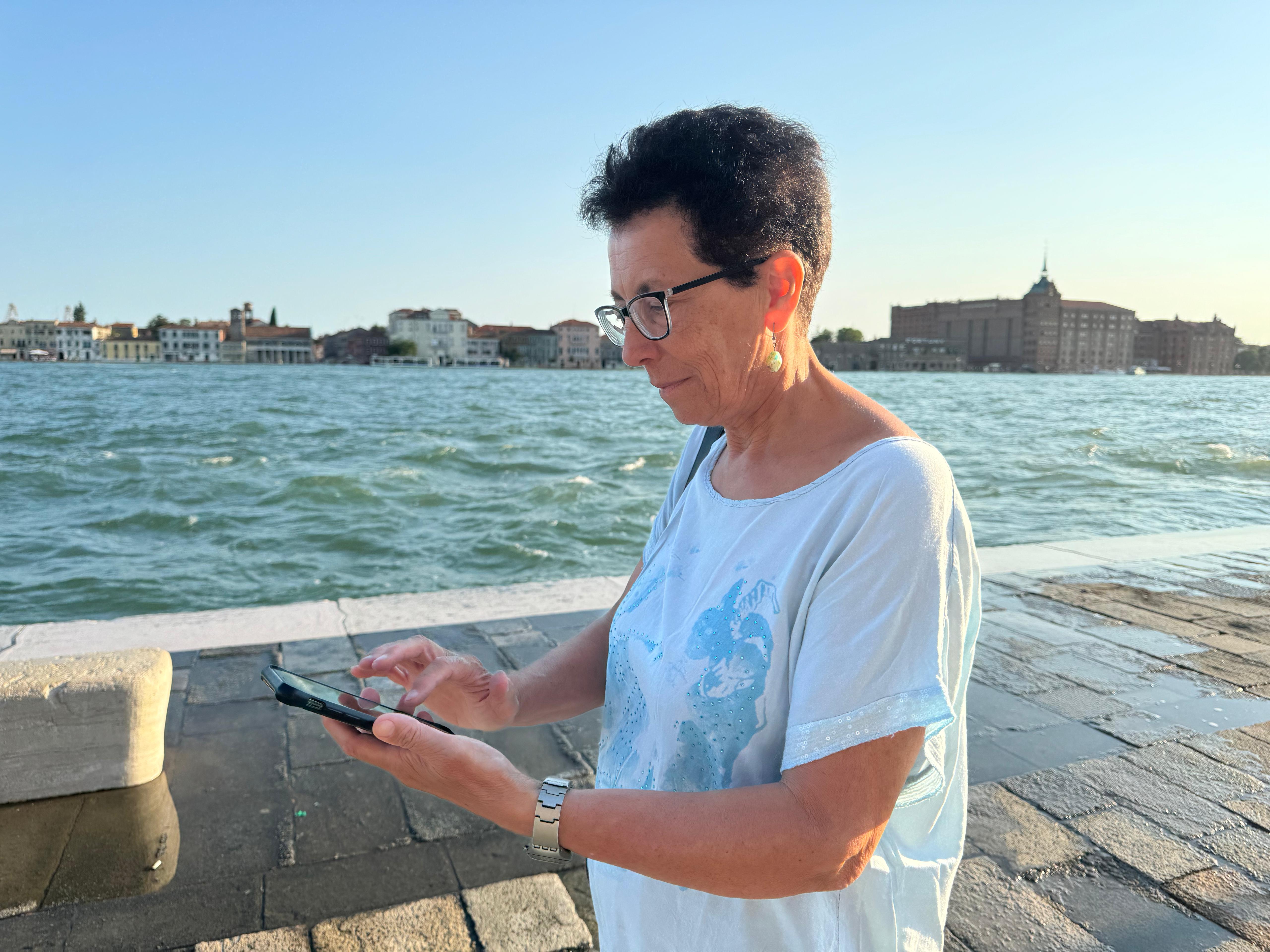
The Blue Seniors demonstrator addressed the social isolation and digital exclusion experienced by Venice's older residents, using the lagoon itself as a connective thread. A structured co-design course at Ca' Foscari University (UNIVE), involving around 100 students, explored what digital tools and platforms could mean for seniors in a city where mobility, heritage, and waterborne connection are inseparable.
The process began with listening: over 100 interviews with elderly Venetians, which the students synthesised into 9 key themes — from social inclusion and mobility to water heritage and sustainability. From these themes, 27 digital platform prototypes were developed, and then evaluated directly by 200 senior citizens in hands-on sessions. The process was as important as the outputs: it created genuine intergenerational encounter, placed seniors at the centre of technological innovation rather than at its margins, and produced a documented body of user-informed design work. The research findings are summarised in the open-access paper "Investigating Digital Tools for Blue Seniors: an Intergenerational Approach" (doi.org/10.1145/3748699.3749825).
Regenerative Menu — Lagoon Boat Trips and the Saòr
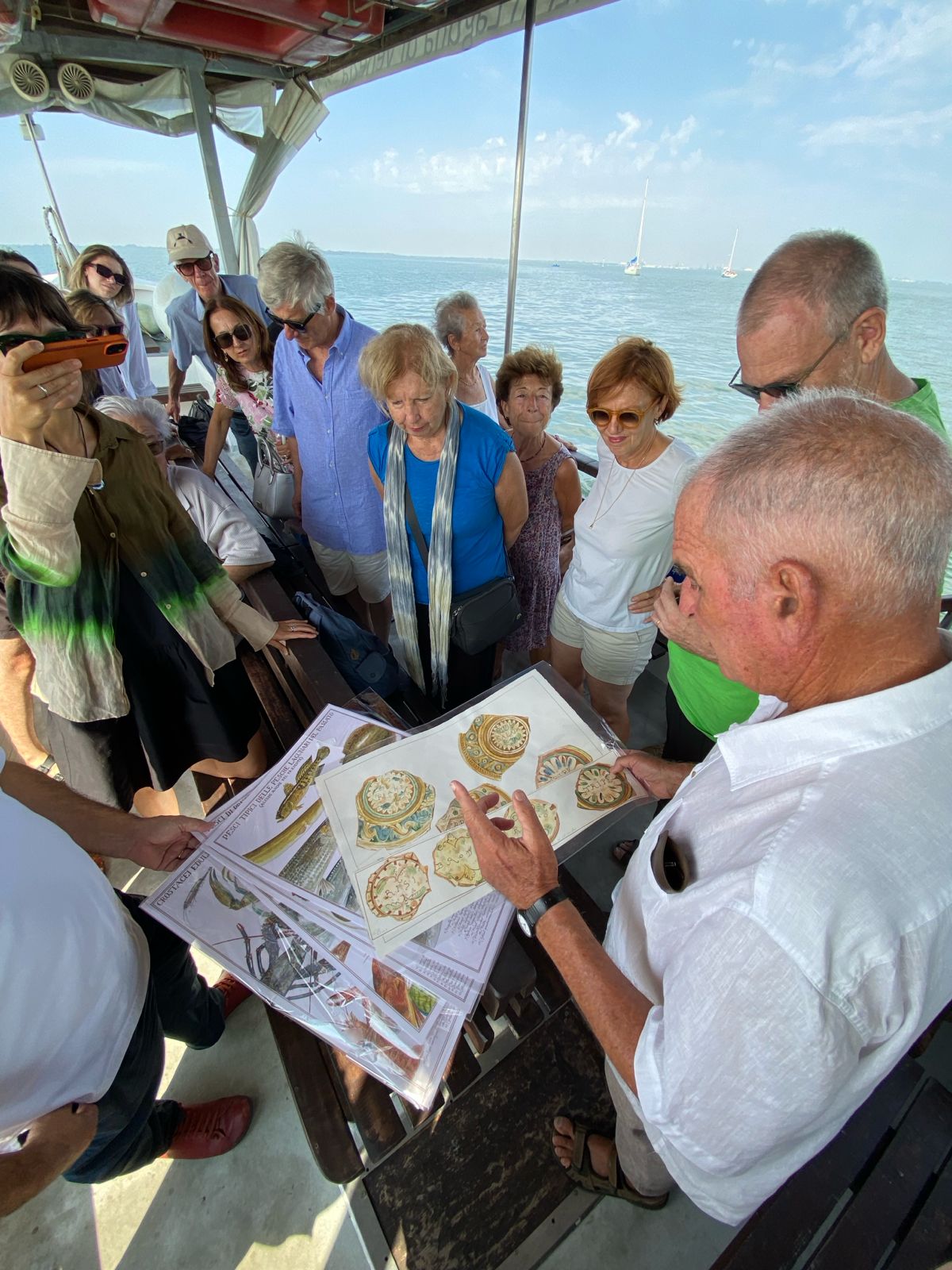
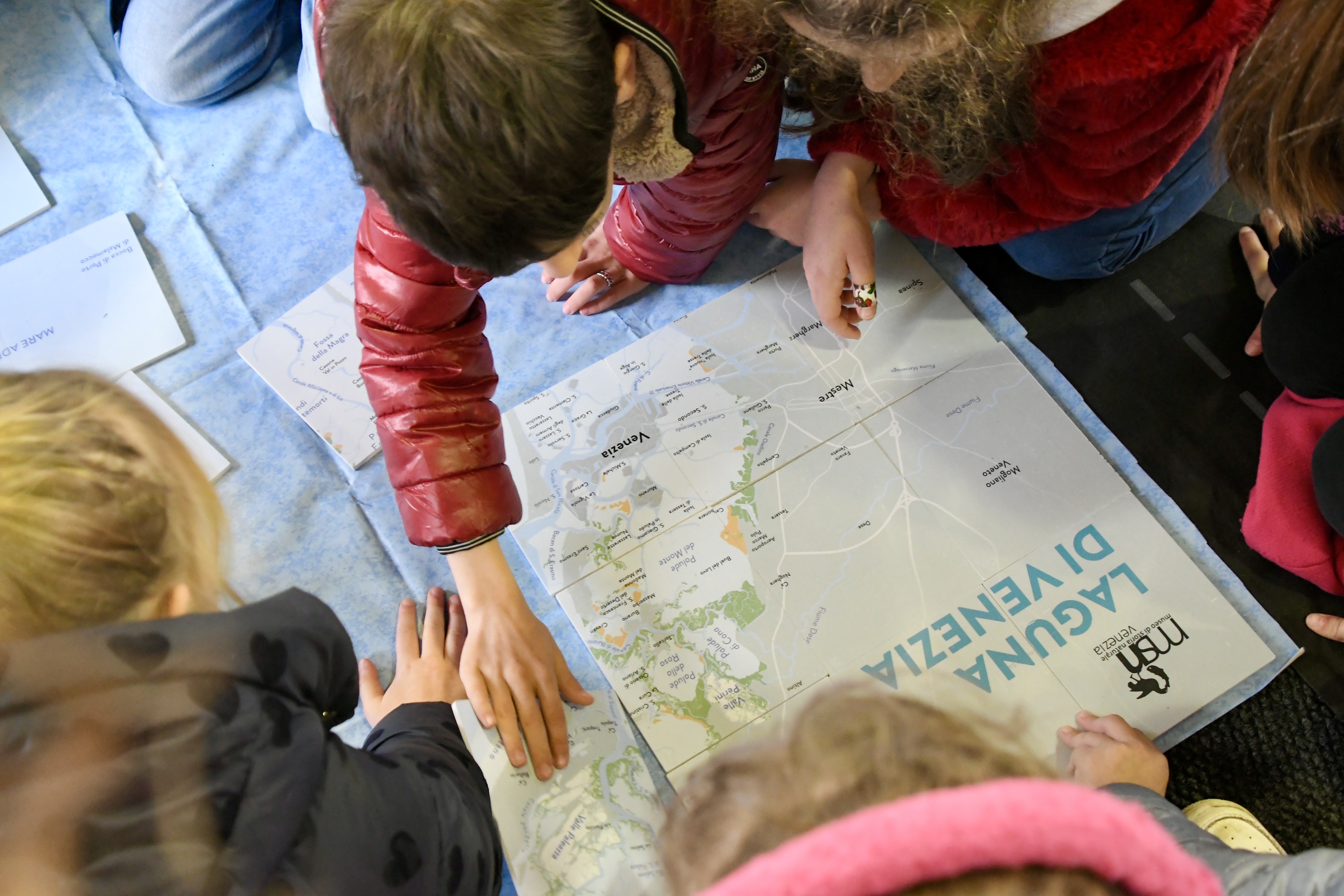
The lagoon itself became a site of learning and encounter through a series of 12 boat trips, bringing together approximately 360 participants across the project period. The trips combined the sensory experience of moving through the lagoon with educational exchange and, in the later editions, sustainable local fish and food tastings for around 80 participants. The lagoon trips functioned simultaneously as Ocean Literacy activities, community-building experiences, and living demonstrations of the ecological richness that surrounds the city.
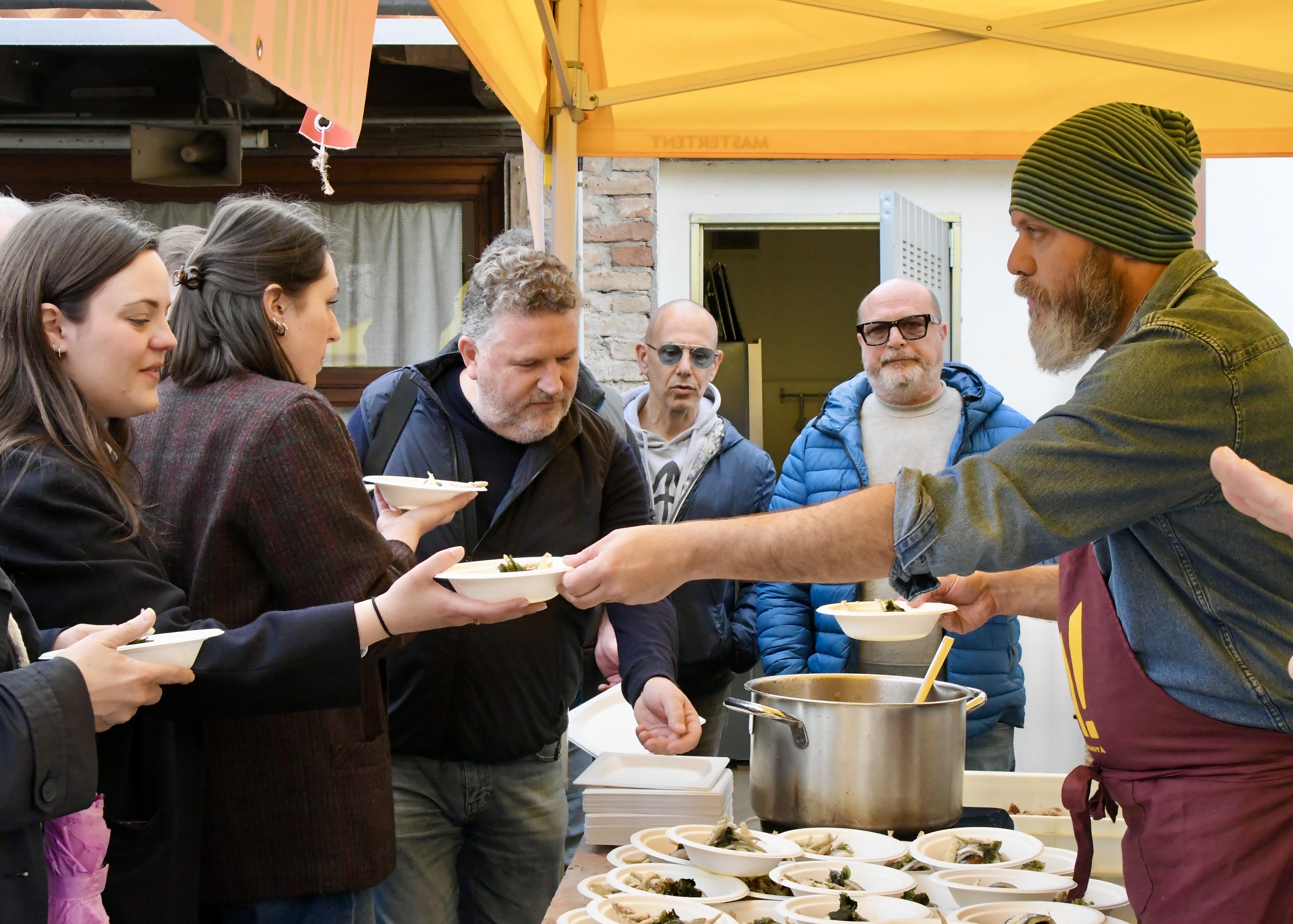
The public event Saòr a San Sebastiano — held in the Bocciofila San Sebastiano sports club in the Dorsoduro sestiere in March 2025 — brought together around 200 participants, including some 60 children, to share food, traditions, and stories. Centred on the saòr, a traditional Venetian sweet-and-sour preparation of fish, the event wove together food culture, sustainability, and intergenerational memory in a neighbourhood setting of genuine warmth.
The Regenerative Lagoon digital platform ([regenerativelagoon.unive.it](http://regenerativelagoon.unive.it)) was developed as a living, community-editable resource that connects recipes to the diverse environments, animal and plant species, boats, and fishing tools of the lagoon. Open to contributions from citizens, fishermen, farmers, and experts, it builds toward a shared memory of the lagoon's ecological and cultural life.
Future Tidal Architectures — Designing with the Lagoon
An intensive one-week extra-curricular architecture workshop, organised by UNIVE, focused on the land–water relationship in the San Basilio and Santa Marta area. Sixteen students developed proposals for regeneration scenarios, which were presented in a final "exhibition of ideas" — feeding directly into ongoing discussions about the area's future, including engagement with the Port Authority.
A concrete downstream outcome: in February 2025, the Port Authority installed benches and a table-tennis table in the Santa Marta area — a small but visible act of tactical urbanism that followed directly from the workshop's momentum, demonstrating how design speculation can translate into real changes to public space.
A "Venice/BoS" exhibition held at IUAV University in September 2025 brought the full range of pilot work to a university audience, connecting research, design, and community practice under a single roof.
The Drops
The Blue Seniors drop placed the experiences of older Venetians at the centre of a design process. Working through a structured university course involving around 100 students, the pilot conducted more than 100 interviews with seniors, synthesising their experiences into nine key themes that informed the development of 27 digital platform prototypes. The prototypes were then evaluated by 200 seniors, creating a documented, user-informed design process that addressed challenges including social isolation, mobility, access to the lagoon and the preservation of water-related heritage and knowledge.
The Regenerative Menu drop used food as a way back into the lagoon. Twelve boat trips took around 360 participants out onto the water – combining the sensory experience of the lagoon with learning, exchange and, in the final trips, sustainable food tasting focused on local fish and lagoon ecology. The public event Saòr a San Sebastiano, held at a bocciofila club in Dorsoduro in March 2025, brought food traditions, sustainability and intergenerational engagement together for around 200 participants, including 60 children.
The Future Tidal Architectures drop brought architecture students into direct engagement with the San Basilio and Santa Marta waterfront – a contested area at the threshold between the historic city and the port. A one-week intensive workshop resulted in an exhibition of ideas for the area’s regeneration, creating a documented set of student proposals that entered into dialogue with institutional perspectives, including the Port Authority.
The Ripples
The Regenerative Lagoon digital platform (regenerativelagoon.unive.it) was developed as a living archive of the lagoon’s ecology and culture – built around traditional recipes, the stories of fishermen and farmers and the knowledge of local experts. It is open to contributions from anyone with a relationship with the Venice Lagoon and is designed to grow beyond the project’s lifetime.
In February 2025, the Port Authority installed benches and a table-tennis table in the Santa Marta area – a small but concrete act of tactical urbanism following the architecture workshop and a signal that the students’ engagement with the space had been noticed.
What it Leaves Behind
Venice leaves behind a rich set of documented methods, tested formats and active digital tools. The Blue Seniors research has been published open access (Pittarello et al., 2025), contributing to the growing field of intergenerational co-design for digital tools. The Regenerative Lagoon platform continues to operate as a shared resource. The Municipality of Venice has expressed a commitment to continuing creative, participatory approaches that combine art, science, education and citizen engagement – with the Bauhaus of the Seas Sails pilot as a reference point.